

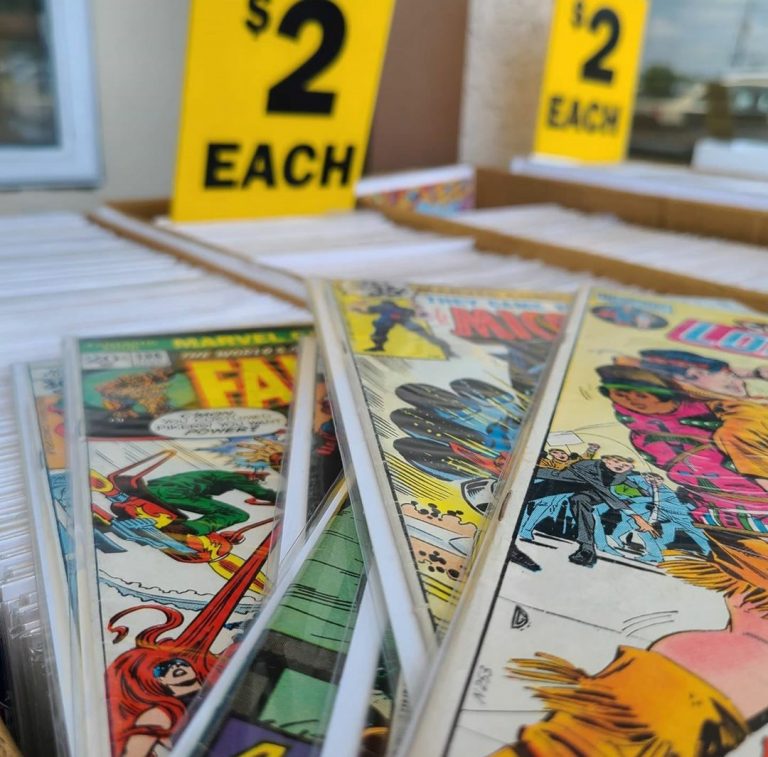

If you would’ve told me as a kid that in the future, people would buy things like comic books, sports cards, records, and toys not to actually enjoy them but to entomb them inside of a sheet of plexiglass and that these people would be adults and not kids, I probably never would’ve believed you. Who would ever do such a thing as buying something that is supposed to bring you joy and transport you back to your childhood days of collecting something so innocent and not actually enjoy it? Adults who see money more than enjoyment of the hobby thats who. People who have taken innocent hobbies and collectibles and turned them into a financial marketplace first and foremost. People who would choose to buy an item and instantly submit it to a grading company in hopes of getting the highest grade possible and eventually sell later on. All is not to blame on just the consumer, the industry and companies play a big part in that as well like fabricating scarcity and a market by only printing 1/500 of something for example. Remember the bagged X-Men #1 or the Death of Superman bagged comics? Yeah, me too. But this is less about grading and slabbing and more about the made up market and values behind items and when you can find higher grade things in raw condition that’s cheaper than the lesser graded slabbed, we have a problem.
Let’s talk about what made things valuable enough to grade in the first place, shall we? As kids, we enjoyed things, whether it was reading a comic book or collecting cards and later rubber banding a stack of cards together which made these items lovingly used. At some point we put our our comics in a long box and our cards in a shoebox or sometimes and old cigar box and forgot about them only to rediscover them 30+ years later. In some cases our parents threw those items away which meant there were less of them in existence and later more scarce which is why we see less copies of things pre-code, post war, from the 1960’s and 1970’s. After that rediscovery, we realized that within a collectors community that maybe one of those items out of the bunch were worth something either by pricing it in some sort of guide like Beckets or the Overstreet Price Guide or stumbling onto an eBay listing. With so many of those items originally printed and now only a few known to exist and of course in various grades, we have a true guide on what is scarce or rare and which is what should guide the market value. Today we see people who I don’t consider collectors or lovers of the hobbies but more so “investors” or speculators of what will be valuable in the future consuming new items without enjoying them and instantly trying to determine a value by sending them out to be slabbed. If 500 people all buy the same thing new and send them out to be graded, we now have a flooded market of the same item with slightly varied Grading. What made something valuable or rare was it being the only one to exist or one of only a few known to exist.
Grading and slabbing in itself, especially with modern day mass market printings or pressings has become such as scam which we are seeing more and more these days especially with what is going on with the company PSA with bad grading as well as some of the fees that they are changing for grading. The company has come under fire quite a few times but it really seems to be in hot water as of late. Now grading isn’t a new thing and has always been something happening in the sports card world especially for older cards but this new sense of let me buy in hopes of something being valuable 30 years from now has the community split in half. One side essentially exploiting a hobby and using it as a financial gain (or hoping to) and the other still seeing it as a passion or love interest that let their items and collection speak for itself in terms of quality and value. During the pandemic we saw so many new collectors coming into the speculative market buying things up because of first appearances or other key happenings in hopes of flipping them later and finding out post Covid that those books have dropped in value. It was rather fun seeing the Instagram rants and complaining how the market reversed and people lost money that was never there to being with.
Now I’m not pro or anti grading and slabbing and it has it’s purpose in certain situations. Grading for grading sake because you bought a new book off the racks with 20000 other people, many doing the same thing doesn’t create a demand now or in the future, it floods s market. The grading of something from 20+ years ago where there’s really no telling how many are out there and the conditions, then ok even though there was mass production especially during the 90s. Something from 35+ years years ago is where I’d say would be the starting point because not everyone was collecting with financial mindset going on. Toys are a different story in my opinion because of the scarcity of finding them in the cleanest boxes or cards possible. Things like that were easyily beat up up sitting on shelves or racks so not only is finding sealed anything rare but finding it sealed in a box that looks like it just came from the manufacturer is even more rare. Case in point, about 20 or so years ago there was a warehouse find of vintage 1970’s boxed Evel Knievel figures and vehicle toy that was found. That news excited collectors like myself and collectors immediately set out to buy from whatever dealer had them. Those sets already had some value on the secondary market but the warehouse find brought new interest and now elevated the value with its discovery. One thing that I will never agree with is the new trend of grading vinyl records, especially new and boutique pressings. Something from the past that had a limited run or an error pressing or something like a Sun Ra record with hand drawn cover and label which is truly a one of one and a piece of art I can see. Grading records for personal value gets a pass especially when you are truly a collector and have pulled together a nice collection of a particular artist or book or something is authographed. But are we really out here grading some of this trash? It has become such a man made market to sucker people into believing something is more valuable than what it is.
The new trend that has hit the grading market is now American collectors and grading companies have invaded the Japanese Manga market. Prior to the pandemic, it was rare to find vintage manga collectors outside of Japan but just like things that Americans get their hands on from other cultures, they ruin it. Suddenly rare manga from Japan that was already known to be rare amongst collectors are now being seeing by non Japanese people who are now doing their best to hoard those things up. Grading isn’t a Japanese thing and items that they collect have more cultural value than anything but as far as Americans, everything comes back to money, not appreciation.
At the end of the day, something is only worth what someone is willing to pay for it which is the way that it’s always been. Yes, things have obvious value and for me, the grading of something has to have a value of at least a few thousand dollars. A lower value raw book is of more value and appreciation to me than a book one of the same grade thats sealed and slabbed. There’s no enjoying it much outside of the cover itself and as someone who is a very visual person, I like to actually read the story, look at the art and store it away. Things are meant to be enjoyed and we can definitely tell the influx of people who never cared about these items until the pandemic where everything collectible seemed to spike in price because of everyone being home and online shopping. I’ve always said, collect what you love because you truly love it, not because someone else or an industry has placed a value on it. That’s not what collecting art or records or anything is supposed to be about. If everyone is collecting the same thing then what makes one collection special or standout from the others?