

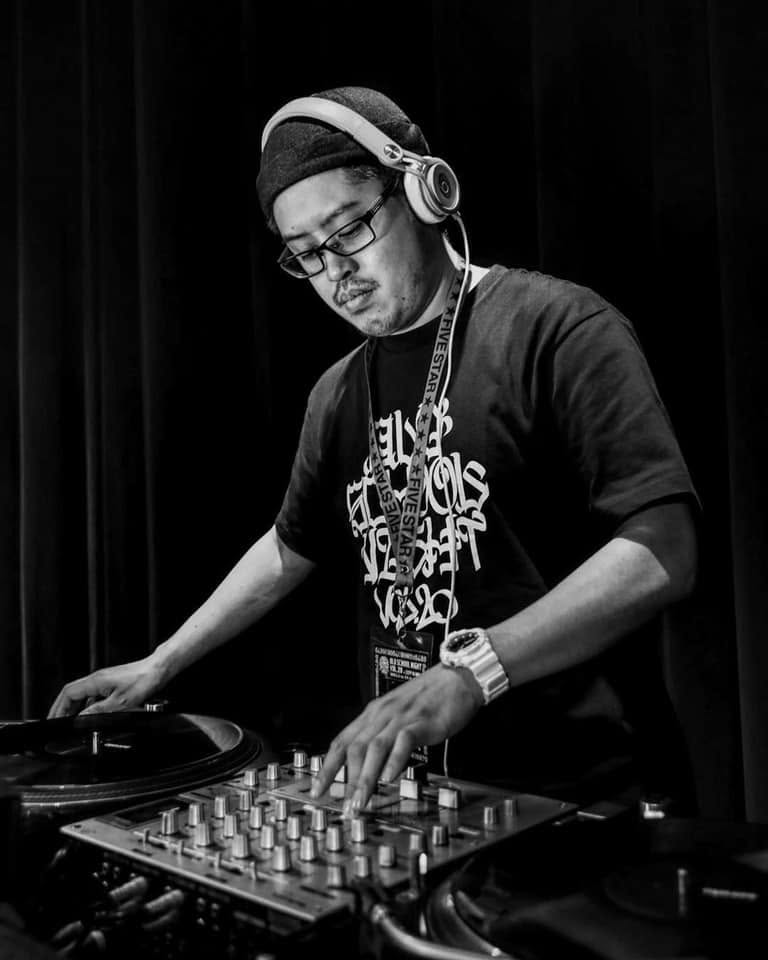

Continuing on with our City Pop interview series here at Nostalgia King, for our second guest we’ve got one of my favorite DJ’s in the genre who I’ve known for quite sometime and originally introduced while DJ’ing in the competition circuit. Kaistar is truly a fixture within the dance community and has not only DJ’d competitions but is known for breaking music within the scene that have become anthems. Over the years, Kaistar and myself have had the opportunity to DJ together in Tokyo and he truly understands how to play for an audience. As with the interview with XL Middleton, this interview was previously conducted but very much on time for you reading appreciation.
Skeme: Thanks for taking the time to do the interview. Can you introduce yourself and let the readers know where you’re from, what you do or are known for.
Kaistar: Hey, this is Kaistar from Los Angeles, CA. I’m a DJ and sometimes-dancer with a love for funk, boogie, and disco from all over the world, but I’m mostly well versed in music from the USA and Japan.
Skeme: When did you first become interested in Japanese culture and / or the music that become globally known now as City Pop?
Kaistar: I’ve always been around and involved in Japanese American and Japanese culture as my mother worked in the Little Tokyo area of downtown LA when I was born and growing up, and I’ve always been tied to things with Japanese roots throughout the years — whether it be video games, anime/manga, food, the language, or so many other things along the way. Around 2008-2009, when I was regularly attending Funkmosphere by Dam Funk, Randy Watson, Laroj, Billy Goods, Eddy Funkster, and Matt Respect, Dam dropped the track “Light’n Up” by Minako Yoshida. It blew my mind at the time — there was Japanese electro by way of YMO, why couldn’t there be Japanese boogie/funk/disco? So I started digging for records locally in LA (Casiopea Mint Jams pickup for $7 at Record Jungle!) until I started going to Japan yearly from 2011 on.
Skeme: What made you want to start a night dedicated to the genre and what gave you heart to do so especially with most of the music not being familiar to American audiences which can be a tough sell to the public?
Kaistar: I can’t even take credit for wanting to start the night we run right now. I’d been playing Japanese sets for almost 9 years before XL and Tremaine invited me to start our night Tokyo Love Song in early 2020. We’d all been playing together here and there – Tremaine used to pick my brain about artists and tracks and then would do some massive digging on his own, and XL has always truly been a man of culture on so many levels. But the idea of playing Japanese funk and disco to American audiences never seemed scary to me from the get-go because it was more like if I can get excited about this, other people can get excited about it too. So when XL and Tremaine hit me up, it was like “oh, this could be really dope in LA”. I owe it to my guys, who came up with the idea and looped me in.
Skeme: What do you find to be special about playing music from Japan on American soil and in a club / dance party setting?
Kaistar: So much of the music borrows liberally from American music so it’s really not that far off the mark from what people listen to already. From Quincy Jones, Howard Johnson on Niteflyte, George Benson, George Duke, Stevie Wonder, Prince, Michael Jackson, and so many more, it pushes that button of nostalgia without people actually knowing the songs, the artists, or the content. There are some sets I’ve put together that link together all of the originals and samples that seem to really put things together for people musically, and I think it’s extra special when people say they understand that much more why they’ve gravitated to City Pop and it’s offshoots other than it being a “genre that transcends space and time”, whatever the fuck that means.
Skeme: In addition to dance party nights what other types of events do you do that you incorporate playing City Pop?
Kaistar:I always put something in everywhere if I think I can get away with it and it makes sense – from corporate gigs to listening parties to whatever I do. I recently DJed a dance battle at Freestyle Session World Finals here in LA a few weeks back and found a perfect spot for a disco track from Miki Matsubara in the whacking battle: Japanese judge, Japanese competitors — why not?. I can’t tell you how many people came up to me with compliments after I did that, so that was cool.
Skeme: Let our readers know about your night dedicated to City Pop and where it all goes down.
Kaistar: XL Middleton of MoFunk Records and I run “Tokyo Love Song”, our bi-monthly party every other first Friday dedicated to City Pop, Japanese funk & disco, and more at Hello Stranger in Little Tokyo, downtown Los Angeles. We also run another party with our family Moniquea and Zackey Force Funk playing boogie, disco, funk, and more. I have a habit of playing Japanese tracks even at Indeed Indeed so come through on Friday nights regardless of which party is going on and there will always be something to make you boogie playing — especially if you have no idea what it is.