

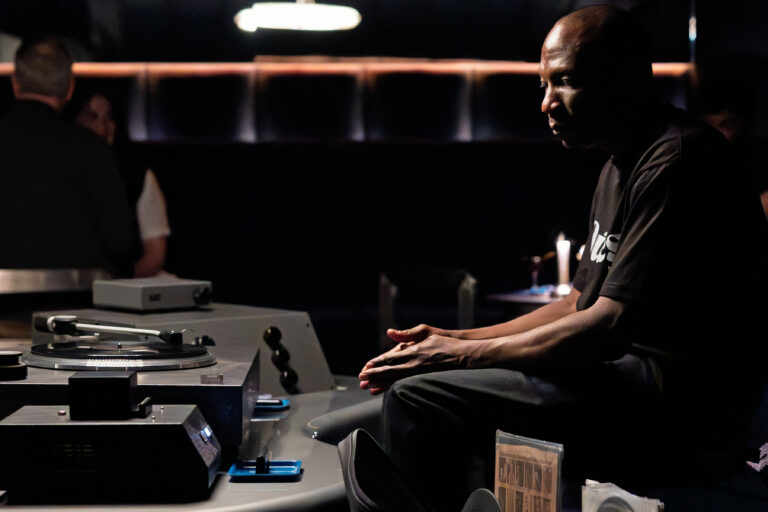

Over the last few years I’ve been doing my best to venture out to as many hi-fi bars as possible to see what the hype is around this newfound trend. For the most part, the experiences have been amazing with the combination of specialty drinks and cocktails and music within beautifully designed space that are dimly lit and sets a mood. Not knowing the ins and outs of what makes these spaces ideal, I caught up with Skeme Richards once again for a chat and to get his take on what makes the perfect listening space.
Mossimo Chao: I’ve been to quite a few hi-fi bars over the last few years and I love the change of pace from being in clubs and typical bars because of the energy in the room. I’m not a sound expert but I know what I like and I know what sounds really good to my ears but I’ve noticed that each room sounds different. Some sound really warm and beautiful while others rather harsh, what in your opinion makes up a good sounding room?
Skeme: There are many factors that come into play when designing a space where some people get it right and others totally miss the mark especially here in America where it’s become the trend to call your business a hi-fi bar or record room or listening lounge. The first thing is planning which is the absolute most important thing you can do. It’s not just about the equipment but the design and treatment of the room and how the space is prepared. It’s not just about putting in equipment and turning the power on, it’s more in-depth than that. How will the music be heard in the space? Will it bounce off of the walls or will it be dampened? Where will the speakers be placed and what type of speakers will be ideal for the space? Things like that should be thought out way before anything else.
Mossimo Chao: I’ve noticed in some spaces that the music isn’t evenly heard depending on where you’re standing, it doesn’t feel immersive at all which I thought was the purpose of these sound rooms.
Skeme: That once again comes back to the planning stage and having an engineer or someone who know sound and the space to set the room up properly so that the music can be evenly distributed throughout. That’s where the type of speaker and speaker placement comes into play. You want them set up at the right points in the room so that the sound travels perfectly to the listeners ears. Many times the bar itself is the first thought and then the sound system itself is the afterthought instead of incorporating them perfectly together. One place that does that perfectly is Dantes in Miami. It’s streamlined to where the bar and booth have a nice flow and the booth is front and center. You can play the music at a respectable level and it can be heard loud and clear without taking it into the red.
Mossimo Chao: So you’ve mentioned these different titles like HiFi bar, record room or listening lounge. What are the differences in them?
Skeme: At this point I don’t even know! The terms have become so gentrified from Japanese culture that it seem like people add one to whatever sounds good with the name of their bar. Like isn’t a hi-fi bar the same as a record room? They both should have Hi-Fi sound systems and play records, right? In the 90’s and 2000’s, these spaces would’ve just been called lounges. We played vinyl in lounges back then but we didn’t call them record bars, it was just a lounge because it was smaller space and not a “club”. I will say that a listening lounge is what these spaces shouldn’t be called if you’re anywhere outside of Japan. Because a true listening lounge you “listen”! There is no talking or dancing in the space.. You order a drink, tea or coffee, you read a book and you listening to what the master has chosen to play and you enjoy. Listening lounges or Kissa’s which is the correct term are for people who are truly there for the listening experience.
Mossimo Chao: So getting back to the sound and what I expected to hear versus what I’m hearing. Being that these spaces are rooted in Japanese culture and Jazz music, I feel like that’s the most authentic experience that you can’t have but the music seems more broad.
Skeme: That comes back to these spaces oftentimes viewed as the club and not an actual hi-fi space. Most DJ’s don’t know the difference or understand sound to even make the distinction between the two. For them it’s a DJ booth and loud speakers so they match their music with that mentality. I’ve been to nights where the DJ will play records that skip or records that have been burnt out and you hear it through the speakers and a good hi-fi system picks up all those little imperfections. When I play, I try to play mostly records that were recorded for hi-fi sound systems or analog which would be records recorded during the 1960’s to 1980’s when people had home stereo systems. Those records were recorded for that purpose, especially jazz where instruments may be panned left and right so you’ll hear all of these special things in the speakers. So my sets you hear jazz, jazz-funk, rare groove, soul, gospel, disco and even house to an extent because of the sonics and warmth. I stay away from Hip Hop and R&B especially 90’s and beyond because that music wasn’t made for hi-fi systems, it was made for bass heavy club systems, made for cars with subwoofers. That music is recorded straight ahead and isn’t enhanced in any way when listening on in these rooms. Most of the 90’s era was muddy and dark sounding so why would you play that on such a beautiful setup where you’re not getting the full experience? That’s where DJ’s don’t know the difference or understand or care to understand the space that they’re in. If I know a record is recorded low, I leave it home because I shouldn’t have to crank the volume just to hear it. If I know a record has a skip in it, I leave it home because things like cheapen the experience of perfection.
Mossimo Chao: You recently played at ShyBoy HiFi in Dallas and that setup looked absolutely amazing. What was it like being in that room?
Skeme: Absolutely amazing and perfect in every way! I was the first person to play the room for their sound advice series and I focused on some of my favorite jazz records and ended with a gospel record. The space is one that you can truly enjoy and melt into the sound. I love talking about great records with people and I got to play records recorded live, records from Japan, records from Eastern Europe and then double back and on an uplifting note with gospel from Detroit. They’ve built something very special in that room and the entire space in general so it’s definitely something that you should check out if you’re in Dallas.